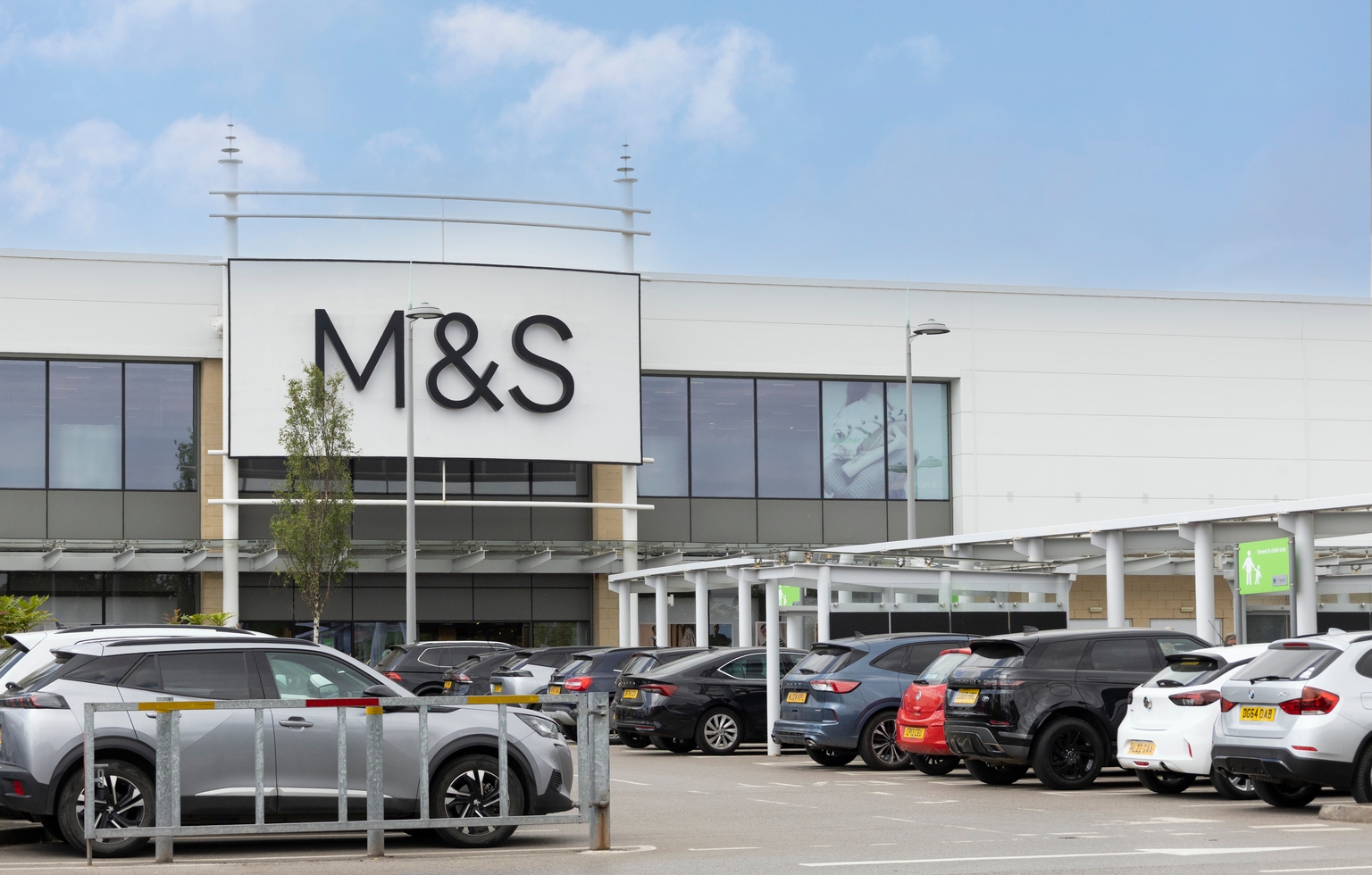
- Marks & Spencer reported a significant adjusted pre-tax profit of £184 million, surpassing analysts' expectations.
- MAKSY (PNK:MAKSY) exceeded its estimated earnings per share (EPS) and revenue, showcasing strong market position and operational efficiency.
- Despite positive earnings, Marks & Spencer's share price declined by 3%, while MAKSY's financial metrics indicate investor confidence and a balanced capital structure.
Marks & Spencer Group PLC, a well-known British retailer, has faced significant challenges recently, including a cyber attack that disrupted its operations. Despite these hurdles, the company reported stronger-than-expected first-half profits, highlighting its resilience. The retailer's adjusted pre-tax profit reached £184 million, surpassing analysts' expectations of £76 million, thanks in part to a £100 million insurance payout.
On the other hand, MAKSY, trading on the OTC exchange, reported its earnings on November 5, 2025. The company achieved an earnings per share (EPS) of $0.16, exceeding the estimated EPS of $0.10. MAKSY's revenue also surpassed expectations, reaching approximately $10.39 billion compared to the estimated $8.76 billion. This performance reflects the company's strong market position and operational efficiency.
Despite the positive earnings report, Marks & Spencer experienced a 3% decline in its share price during early trading. This decline occurred even though the company's results were described as "better than feared" by analysts. The cyber attack in April severely impacted the company's operations, leading to a 55.4% drop in first-half underlying profit. However, the company is on track to return to full operational capacity by the end of the year.
MAKSY's financial metrics provide insight into its market valuation. The company has a price-to-earnings (P/E) ratio of approximately 27.27, indicating investor confidence in its earnings potential. Its price-to-sales ratio stands at about 0.57, suggesting a favorable market value relative to sales. Additionally, the enterprise value to sales ratio is around 0.72, reflecting the company's total valuation compared to its sales.
Marks & Spencer's recovery strategy includes a dividend hike, signaling confidence in its future prospects. The company's food sales rose by 7.8%, generating an adjusted operating profit of £89.1 million, although margins fell to 2.0% from 5.1%. Meanwhile, MAKSY's debt-to-equity ratio of roughly 1.00 suggests a balanced capital structure, while its current ratio of approximately 0.87 indicates its ability to cover short-term liabilities.